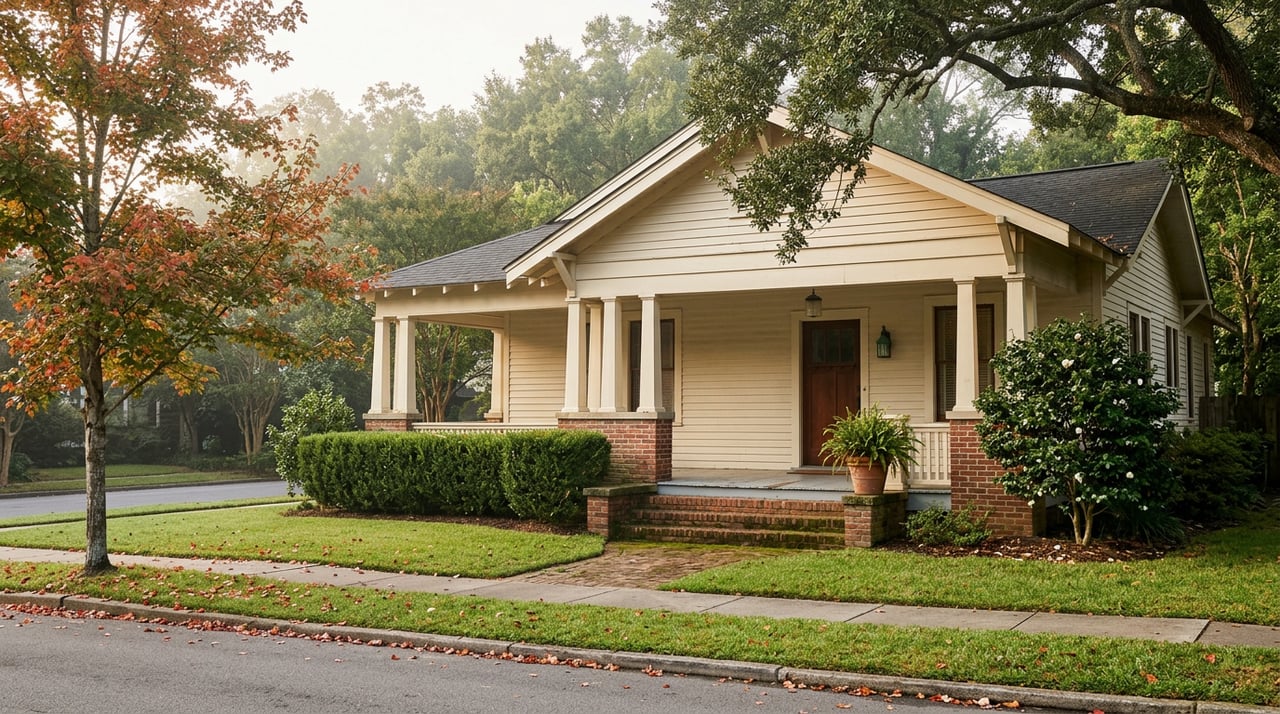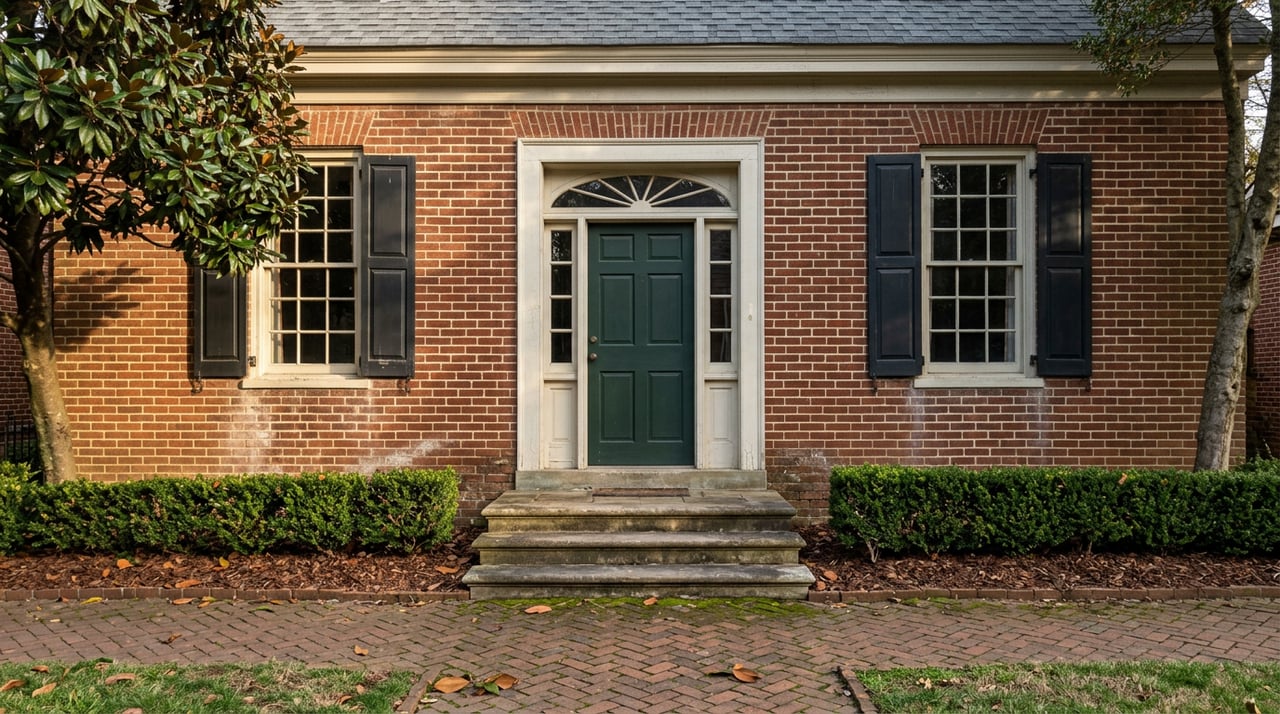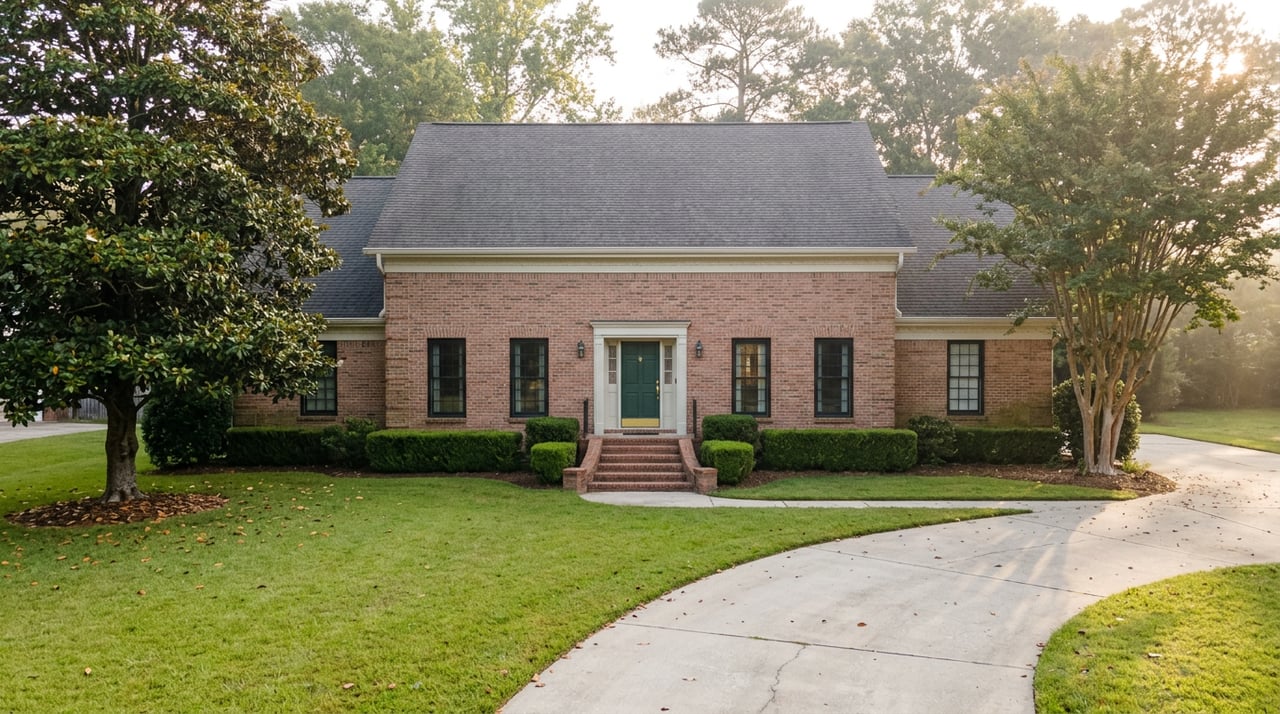
Picture touring two homes in Oconee County on the same Saturday afternoon. Same price bracket, same square footage, half a mile apart. One comes with a monthly water and sewer bill from the county. The other has a well, a septic tank, and no bill at all until something breaks. Nothing on the sign, in the listing description, or in the price tag tells you which one you're looking at.
That split is not random, and it has almost nothing to do with how rural either lot feels. Oconee County decides it parcel by parcel, using a rule that lives in a subdivision application form rather than in anything a buyer would normally see.
The Rule Buried In The Subdivision Application
When a developer submits plans for five or more lots in Oconee County, the subdivision application filed with the county's Environmental Health office has to answer a direct question: is the water supply going to be city water, an individual well on each lot, or a community well? And it spells out the test that decides the answer. Developers must disclose whether "connection to a public water supply system shall be required if available within one thousand (1,000) feet" of the proposed subdivision.
That is the entire mechanism. If a county main runs 1,050 feet from the property line, hookup is optional. If it runs 950 feet away, hookup becomes mandatory. The rule never asks how close the neighborhood sits to downtown Watkinsville, what the homes are going to sell for, or how the development is being marketed. It asks one question about pipe distance, and the answer determines whether every future owner on that street pays a utility bill or maintains a septic system.
Why Distance To Town Isn't The Real Variable
It would be easy to assume that closer to Athens or Watkinsville means public water, and farther out means well and septic. That is not how it plays out in a county growing as fast as this one. Local coverage of Oconee's utility planning has made the underlying logic plain: providers "do not proactively extend services unless there is a demonstrated demand," according to reporting on a county memo about sewer service planning. A parcel three miles from downtown can end up on well and septic simply because no developer has yet paid to extend a main past it, while a subdivision farther out gets full utilities because a builder funded that extension to unlock a larger project.
The county does have a formal process for changing that picture. Developers or property owners can file a water and sewer extension application to bring a main closer to a parcel that currently sits outside the 1,000-foot line. But plan approval on that kind of extension is only valid for twelve months from acceptance, and a written request to extend it has to go in thirty days before that window closes. A well-and-septic subdivision can become a served one within a few years. It does not happen automatically, and it does not happen on a buyer's closing timeline.
What This Looks Like When You're Actually Touring Homes
Right now, Oconee County's active inventory spans everything from larger-lot gated communities like Malcom Bridge Estates to swim, tennis, and golf-oriented neighborhoods such as Charleston Park inside The Georgia Club, Dials Mill Plantation, and Meadow Springs near Watkinsville. The acreage, the amenity package, and the price point all vary across that range. None of it predicts which utility system comes with the house, because the 1,000-foot line runs through the county without regard to any of it.
That is the part worth carrying into a home search: the neighborhood's name and marketing tell you almost nothing about whether you're buying a monthly utility bill or a maintenance schedule.
A short list worth working through before you fall for a floor plan:
- Ask the builder or listing agent directly whether the specific lot is served by public water and sewer or by an individual well and septic system. Don't infer it from the subdivision's amenities or price.
- If it's septic, ask for the county-issued permit and any pumping records. Systems generally need pumping every three to five years, and a documented history speaks for itself.
- If the lot sits near the edge of the service area, ask whether an extension has already been approved or requested, and where that twelve-month approval clock currently stands.
The Closing Mechanics Nobody Warns You About
Georgia does not require a point-of-sale septic inspection at the state level, and no Georgia county has adopted one either. Financing fills that gap instead. FHA, VA, and most conventional lenders will not close a loan on a septic property without documentation that the system works, typically a Performance Evaluation Report from the county Environmental Health office using the state's standard Form 14.L. That report runs $400 to $600 and covers tank condition, drain field function, and structural integrity.
The number that actually moves a negotiation is bigger. A system that fails that inspection can pull $10,000 to $30,000 off a purchase price, a meaningful swing on a home in the $500,000 to $700,000 range that describes a lot of current Oconee County inventory. Cash buyers skip the lender requirement but not the underlying risk, so a few hundred dollars spent confirming the system works still beats discovering a failed drain field after the papers are signed.
Statewide, an estimated one million to 1.3 million Georgia homes rely on septic systems, and a meaningful share of that total sits in fast-growing counties like this one. Sellers with a septic system should pull pumping records and consider a fresh inspection before listing. Buyers move through due diligence faster when that paperwork already exists, and a documented system reads very differently than an unknown one on the same street.
A Few Questions Worth Asking Before You Tour
Does every home in Oconee County run on well and septic? No. Plenty of newer neighborhoods, particularly ones built near existing county mains around Watkinsville, run on full public water and sewer. The deciding factor is the 1,000-foot rule, not how rural the address sounds.
Can a well-and-septic lot ever get connected to county utilities later? Yes, through the county's water and sewer extension application process. But that approval window is only twelve months and has to be actively renewed, so it isn't something to count on inside a typical home search timeline.
What should I ask before writing an offer? Ask plainly whether the specific lot sits inside the service area or relies on well and septic. If it's septic, request the permit and pumping history before your due diligence period starts, not once it's already running.
If you're weighing a move into Oconee County and want to know what a specific subdivision or lot is actually working with before you write an offer, that's exactly the kind of question Eric Vaughn can help you answer before it becomes a surprise at closing. Reach out for guidance tailored to the neighborhood you're considering, or start with a free home valuation if you're the one selling into this market.