If you have been comparing Athens neighborhoods on a portal, Normaltown probably looks like a paradox. One dashboard shows the average sale price down almost 15% year over year. Another shows the three-month median up 27%. Both are pulled from the same MLS feed, and both are technically correct.
The reconciliation is the whole point of this post. Normaltown is a small, thinly traded submarket sitting next door to the largest new demand catalyst Athens has produced in a decade, and the median price is the least useful number you can use to shop it. What your money buys here is decided street by street, not by a headline figure.
The contradiction sitting in the May numbers
In May 2026, five homes sold inside the Normaltown boundary. Five. That is the entire sample the portals are using to tell you where prices are going. Redfin's calculation from that month put the average sale price at roughly $525,000, down 14.9% from the same month a year earlier, while the rolling three-month median climbed to $594,800, up 27% year over year.
Both figures come from the same handful of transactions. The direction of the number depends almost entirely on which houses happened to close in which window. When one 4-bed on Price Avenue sells for $990,000 in the same three months as a 2-bed cottage on Sunset for $405,000, the median and the average tell different stories because they are describing different houses, not a shifting market.
Here is what the last two months of Normaltown closings actually look like:
| Address | Closed | Beds/Baths | Sq Ft | Price |
|---|---|---|---|---|
| 310 Price Avenue | Jul 20, 2026 | 4 / 4 | 3,363 | $990,000 |
| 495 Talmadge Drive | Jul 8, 2026 | 4 / 3 | 2,195 | $850,000 |
| 282 Holman Avenue | Jun 25, 2026 | 3 / 2 | 1,717 | $626,000 |
| 305 King Avenue | Jun 22, 2026 | 3 / 2 | 1,620 | $525,000 |
| 337 Sunset Drive | Jun 11, 2026 | 2 / 1 | 1,222 | $405,000 |
The spread from $405,000 to $990,000 in a neighborhood you can walk across in fifteen minutes is not noise. It is the actual shape of the market. Once you see it that way, the median stops being a target and starts being an average of five very different houses.
What five sales can and can't tell you
Thin volume changes how you should read every data point. A 27% year-over-year median move on five transactions is a mix effect, not a trend. If two of those five sales are larger, renovated homes on Price or Talmadge, the median jumps. If two are 1,200-square-foot cottages on Sunset, it falls. Neither outcome tells you that the same house is worth 27% more or 15% less than it was last summer.
The practical read for a buyer is that you cannot price a Normaltown offer off a neighborhood median. You have to price it off the two or three most recent closings on comparable streets, in comparable condition, at comparable square footage. Days on market averaged 57 in May 2026, per Redfin, which is not a bidding-war pace and not a stale market either. That gives you room to write a considered offer instead of a reflex one.
The demand catalyst the median doesn't show
The reason Normaltown matters right now is a mile of Prince Avenue frontage most portal maps ignore. The UGA Health Sciences Campus sits on the 58-acre former State Normal School and Navy Supply Corps School site, and it is the address of the new UGA School of Medicine. The school's $100 million medical education and research building broke ground in 2024 and is scheduled for completion in December 2026, the same academic year the inaugural class enrolls.
The class size math is the part buyers should pay attention to. UGA has authorized an initial class of 60 students, expanding to 120, and the Medical Partnership on the same campus has been training physicians in Athens since 2010. Layered on top are the College of Public Health, College of Pharmacy, and School of Social Work programs already anchored to the same 58 acres. That produces a steady flow of faculty, residents, and staff who want to walk or bike to Prince Avenue rather than commute across town.
Normaltown's original street grid, drawn a century ago for the State Normal School's teachers and students, happens to be the housing stock closest to that door. That is a supply-and-demand story the median cannot show you because the median treats every Normaltown address as interchangeable, and they are not.
What your budget actually buys, block by block
Using the last two months of sales as the anchor rather than the neighborhood median, here is how the market is stratifying right now:
- Under $450,000. Small-footprint cottages, typically 1,000 to 1,300 square feet, one to two bedrooms, often original 1940s to 1960s construction with partial updates. Sunset, Clover, and the outer blocks toward Chase Street are where these still trade. Expect deferred maintenance items in inspection.
- $450,000 to $650,000. The Normaltown middle, and the deepest part of the market. Renovated three-bedroom bungalows around 1,600 to 1,800 square feet, roughly the King Avenue and Holman Avenue profile. Kitchens and baths are usually updated, systems are mixed, and lot sizes vary widely.
- $650,000 to $900,000. Larger renovated homes, 2,000 to 2,500 square feet, often with added square footage in a rear addition or a finished basement. Talmadge Drive is the recent comp. Walkability to Prince Avenue restaurants and to Bishop Park is priced into this tier.
- $900,000 and above. The Price Avenue and inner-block tier: 3,000-plus square feet, whole-house renovation or new construction on an infill lot, and the tightest proximity to the Health Sciences Campus gate. Fewer than a handful trade in any given quarter.
Two amenities keep showing up in listing text across every tier and are worth weighing in your offer: walking distance to Bishop Park, which hosts the Saturday farmers market, tennis courts, the pool, and the trail network; and the free Athens Transit Bus 7 that connects the neighborhood to downtown. Neither is a luxury feature, and both compound the case for buying closer to Prince Avenue rather than further out.
How to read a Normaltown comp in this market
Given the thin-volume problem, a workable buyer discipline looks like this:
- Pull the last three closings within a quarter mile, not the neighborhood median.
- Adjust for renovation depth, not just square footage. A 1,700-square-foot cottage with original systems and a 1,700-square-foot cottage with a rebuilt kitchen, new HVAC, and refinished floors are not the same asset.
- Weigh Prince Avenue proximity explicitly. Distance to the Health Sciences Campus gate is a real variable in this submarket in a way it is not in most Athens neighborhoods.
- Assume a 45- to 60-day marketing arc rather than a same-weekend decision. Days on market ran 57 in May 2026, which is enough time to inspect properly.
Sellers reading this should draw the opposite conclusion from the same data. A house priced to the neighborhood median in a mixed-comp environment either leaves money on the table or attracts no offers, depending on where it actually sits in the stratification above. Pricing needs to be built from the two or three nearest recent closings, not the headline figure.
Frequently asked questions
Is the Normaltown market up or down right now? Neither in a directional sense. Five sales in May 2026 is too small a sample to call a trend. The three-month median rose to $594,800 as of May 2026 while the single-month average fell to $525,000, which reflects which specific houses sold, not a shift in underlying values.
Does the UGA School of Medicine actually change Normaltown home prices? It changes demand at the margin, particularly for homes within walking distance of the Prince Avenue gate. The inaugural class is 60 students, growing to 120, and adds to the existing footprint of the Medical Partnership, College of Public Health, and College of Pharmacy already on the campus. Whether that pressure shows up as higher prices or as shorter days on market is worth watching over the next several quarters.
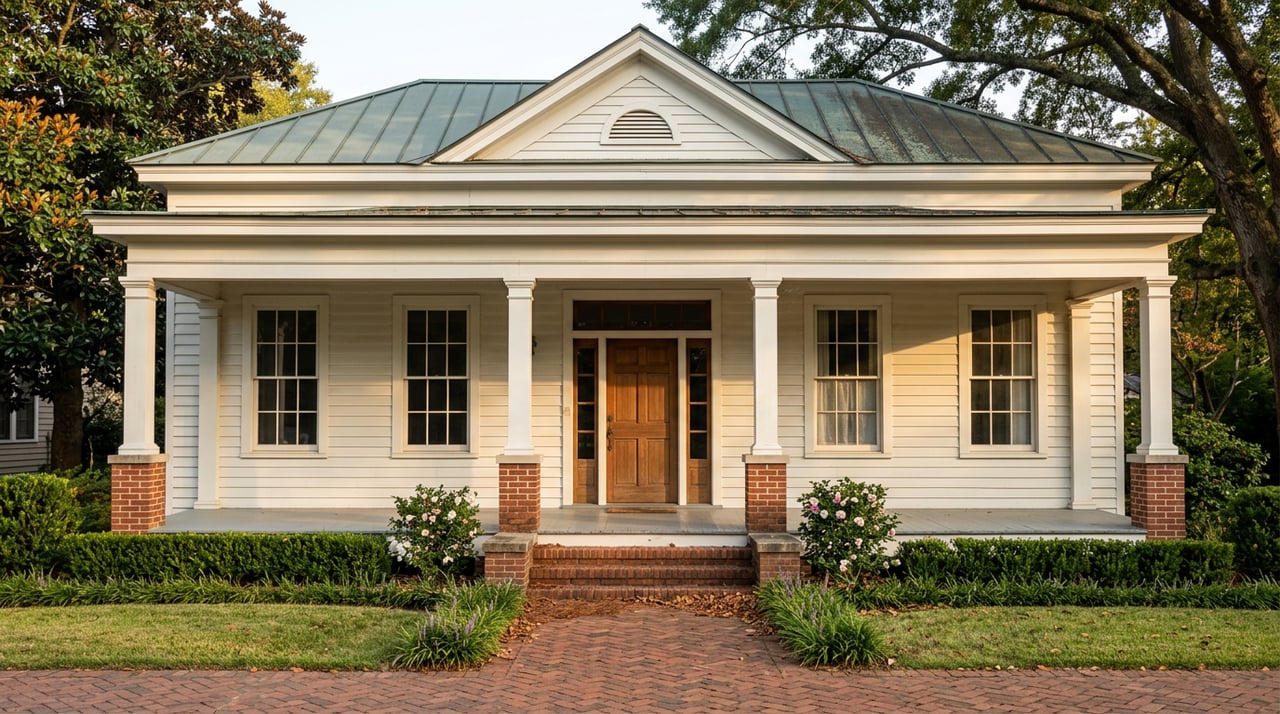
What is the typical Normaltown house? There isn't one. The neighborhood was built out gradually from the early twentieth century onward, so a single block can hold a 1920s bungalow, a 1960s ranch, and a 2019 infill build side by side. That is the mechanical reason the median is so unstable here and why comp selection matters more than in a subdivision.
Normaltown rewards buyers and sellers who read past the dashboard. If you want an honest comp read on a specific street, or a pricing strategy that accounts for the Prince Avenue proximity premium, Eric Vaughn will walk the block with you and put the numbers on paper. Start with a free home valuation and a conversation about where your budget lands in the block-by-block breakdown above.