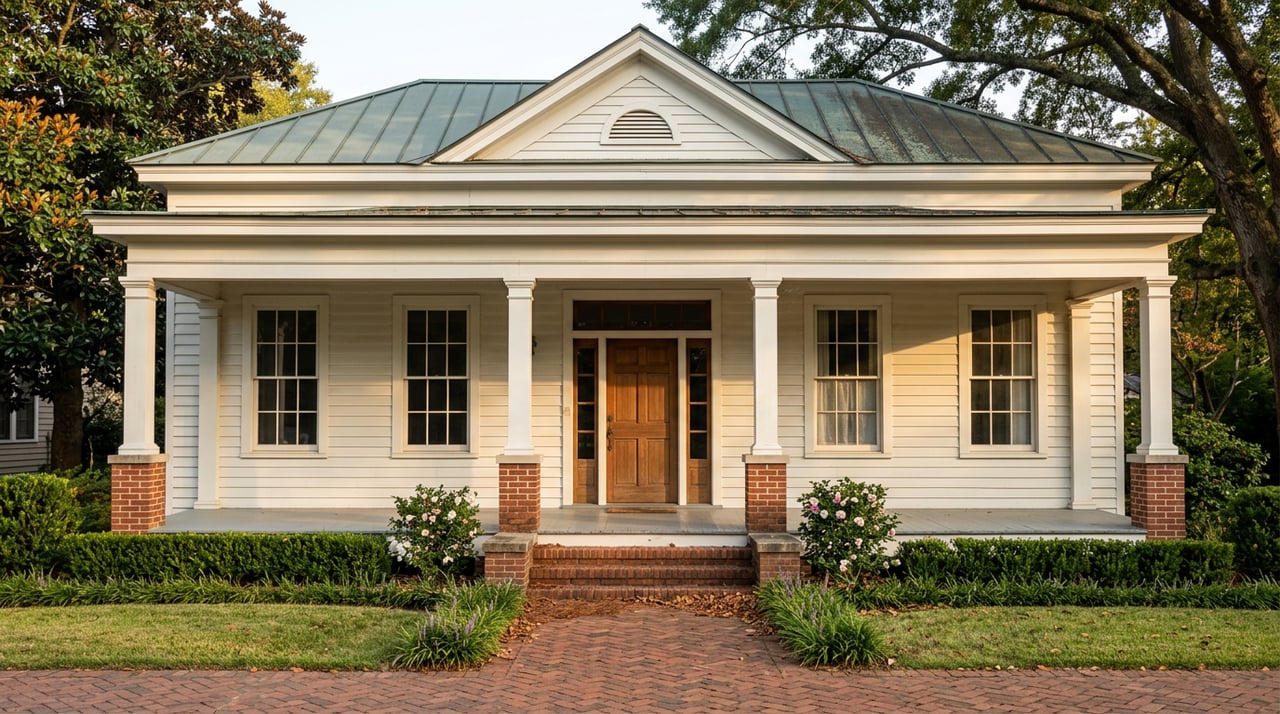
Two homes a block apart in Cobbham can post wildly different numbers and neither one is lying. Pull a rolling twelve-month sales report for the neighborhood, as of mid-2026, and you'll find a median sale price near $555,000, up an eye-catching 36 percent from the prior twelve-month period, alongside an average sale price of $650,465, up 18 percent over the same comparison. Pull a separate valuation estimate for the same streets and the median drops to $419,000. That's a gap of more than $130,000 depending on which number you happen to read first.
The instinct is to blame small sample size, and that's part of it. Cobbham is a compact, in-demand historic pocket, so a handful of landmark closings can swing a median hard in either direction. Paperwork is another part of a Cobbham property's history to consider: whether exterior changes have a documented, county-approved record. The sections below explain the local review process and how buyers, owners, and sellers can check that history.
Two Layers of History, One Layer of Control
Cobbham earned a spot on the National Register of Historic Places on August 24, 1978, covering 216 contributing buildings across roughly 117 acres bounded loosely by Prince Avenue, Hill Street, Reese Street, and Pope Street, according to the National Register listing. That designation is largely honorary. It recognizes the neighborhood's architecture, which spans Greek Revival, Gothic Revival, and Late Victorian styles, but it doesn't, by itself, require anyone to ask permission before changing anything.
What actually governs what you can do to a Cobbham exterior is a second, separate designation: the local historic district, created by Athens-Clarke County a full decade later, in 1988, according to the Historic Cobbham Foundation's own timeline. That local designation is what puts every contributing property under the review of the Athens-Clarke County Historic Preservation Commission, and it is relevant to buyers and renovators reviewing planned exterior work.
What Actually Requires Sign-Off
Under the county's rules, a Certificate of Appropriateness is required before you make almost any exterior change to a property inside the district. That covers building material changes, additions, new construction, demolitions, and site features like new driveways, fences, or retaining walls, per the Athens-Clarke County FAQ on historic preservation. Routine maintenance is exempt. Painting the trim or replacing a shrub doesn't trigger a review. Replacing the roof, enclosing a porch, or adding a garage does.
The process itself runs on a fixed monthly clock, not a rolling one:
- According to the Athens-Clarke County FAQ on historic preservation, Certificate of Appropriateness applications are due to the Planning Department on the first Wednesday of the month.
- Planning staff prepares a report on the application.
- The Historic Preservation Commission hears and decides the application at its regular meeting on the third Wednesday of that same month.
- If the commission denies the application, the property owner has thirty days to appeal to the Athens-Clarke County Mayor and Commission, and from there to Superior Court.
Miss the first Wednesday deadline by a single day and the earliest you'll get in front of the commission is the third Wednesday of the following month, not this one. A renovation plan that assumes a two-week turnaround can just as easily become a six-week wait, and that's before accounting for any conditions the commission attaches to an approval.
What the County's Own Files Show
Two real Cobbham case files illustrate how granular this review gets. At 475 N. Church Street, the commission approved metal roofing for a rear shed slope, but only on the condition that the material be a traditional profile such as 5V or true standing seam, not just any metal panel. Staff had traced the parcel back through Sanborn fire insurance maps dating to 1908, when the structure served as a servants' quarters for a house on Hill Street, before evaluating whether a modern roofing material fit the building's documented history, according to the staff report on file with Athens-Clarke County.
At 889 Hill Street, staff again worked backward through Sanborn maps, dating the main structure to at least 1918 with parts possibly built around 1870, and cataloged every prior Certificate of Appropriateness on file for the property, including a 2005 approval for a carport and a 2012 approval to enclose that carport into a garage, per the staff report for that address. Every application to that commission starts with staff pulling this kind of parcel history before they even get to the current request.
That history is useful to keep in mind. If a previous owner enclosed a porch, replaced windows, or added a carport without filing for a Certificate of Appropriateness, the file may not document the work. A later application for the same address may raise questions about earlier changes.
How Property History Can Affect a Sale
A property's documented exterior history is another consideration when planning renovations. A Cobbham house with a clean, documented Certificate of Appropriateness history, one where every roof, porch, and fence change is on file with the county, carries less renovation risk for the next owner. Lenders and appraisers can see a project's history matches its permits. A house without that trail carries a different kind of uncertainty. Buyers who catch that during due diligence tend to either negotiate the price down or walk. Separately, recent snapshots put Cobbham's average time on market anywhere from 53 to 59 days, overlapping the 44-to-55-day national benchmarks and extending beyond them.
What This Means Depending on Where You Sit
If you're buying a fixer in Cobbham, budget time for the county's calendar, not just your contractor's. A first Wednesday deadline you miss by a day costs you a month.
If you're renovating a home you already own here, pull your own parcel's Certificate of Appropriateness history before you plan a project. If a past owner's porch enclosure or carport was never filed, reviewing that history before planning another project or preparing to sell can help clarify next steps.
If you're selling, a folder of past Certificates of Appropriateness is a credibility asset, not paperwork clutter. It tells a buyer's lender and appraiser that the house they're financing matches what the county has on record, which is exactly the kind of confidence that keeps a Cobbham closing on schedule instead of stretching past two months.
If Cobbham's daily rhythm and architecture are still the draw and you want the fuller picture of what living there looks like beyond the paperwork, our neighborhood guide to Cobbham covers that ground.
Frequently Asked Questions
Does a Certificate of Appropriateness apply to interior renovations? No. The review covers exterior changes only, including materials, additions, new construction, and site features like fences or driveways.
Do I need a Certificate of Appropriateness to paint my house or plant landscaping? No. Minor repair and maintenance work, including painting and plantings, is exempt from the review requirement.
What happens if the Historic Preservation Commission denies my application? You have thirty days to appeal to the Athens-Clarke County Mayor and Commission, with a further appeal available to Superior Court if needed.
Is Cobbham's National Register listing the same thing as its local historic district? No, and this is the distinction that trips people up. The 1978 National Register listing is largely honorary. The 1988 local historic district designation is what actually requires a Certificate of Appropriateness before exterior work.
Buying, renovating, or selling a contributing home in Cobbham comes with more moving parts than the listing photos suggest. If you want a second set of eyes on a property's Certificate of Appropriateness history before you write an offer, or a clear read on what your own home is worth with its paper trail factored in, Eric Vaughn at RevSells is a phone call away. Get a Free Home Valuation and start with the facts instead of the guesswork.
This article is general information, not legal, tax or financial advice. Consult a qualified professional about your situation.